



Sen no Rikyū's teaching
Sen no Rikyū shaped the Japanese way of tea. Our bundle carries his name because his idea is the idea behind DMG: make a good bowl of tea, slowly, and actually enjoy it.
Tea is simply this: heat the water, make the tea, and drink it.Sen no Rikyū, 1522 to 1591
Four ideas behind every bowl.
Rikyū boiled the way of tea down to four values. They are as useful at your kitchen counter as they were in a tea room.
Harmony
Being at ease with the people and the moment around you.
Respect
Treating guests, tools and ingredients with care.
Purity
A clean space, clean tools and a clear mind.
Tranquility
The calm that comes from slowing down.
Seven short rules. A whole way of living.
When a student asked for the heart of his teaching, Rikyū is said to have answered with seven simple rules. Here is what each one means, and how to bring it into your own cup.
Make a satisfying bowl of tea.
Everything starts here. A bowl made with care, for the person who will drink it, is the whole point of the practice.
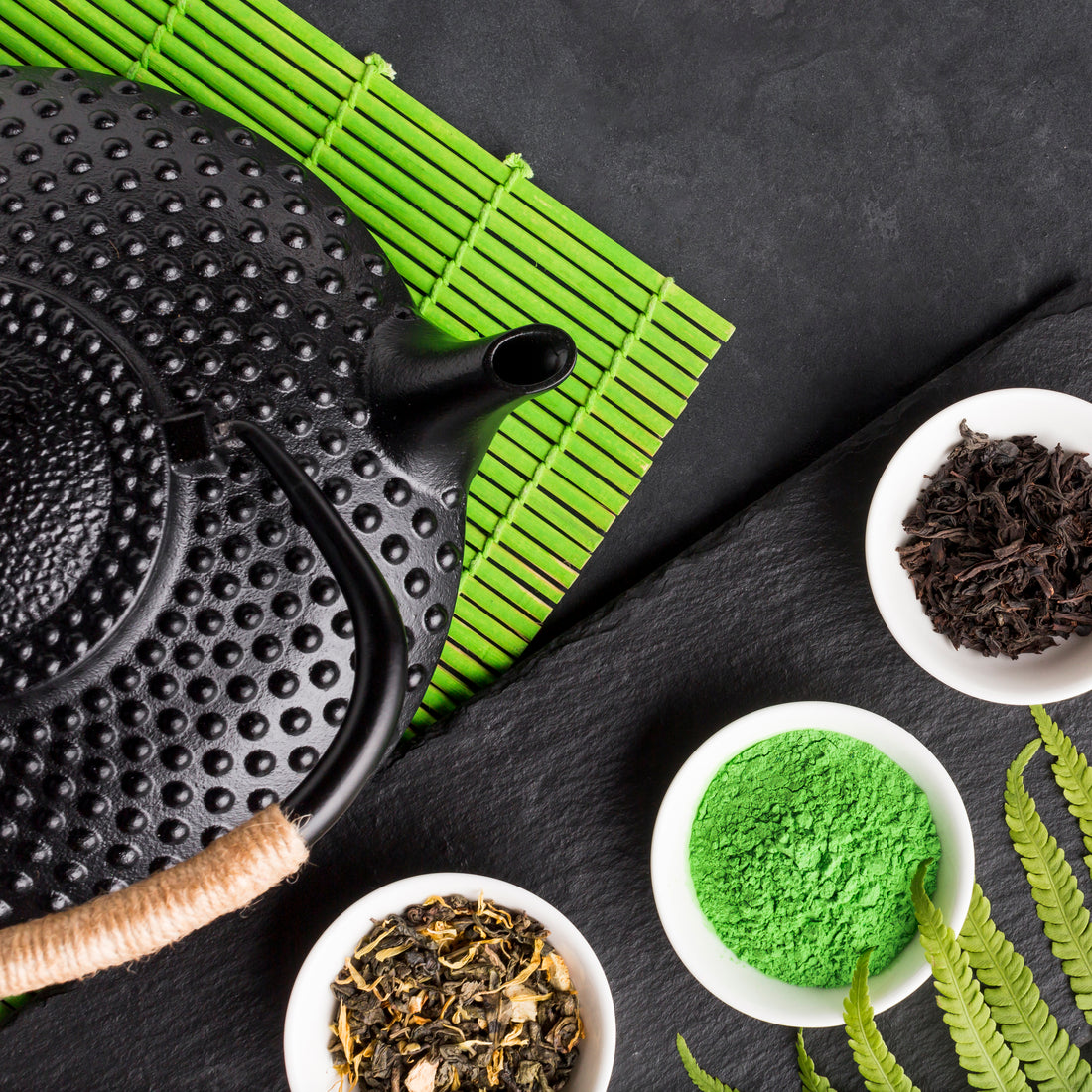
Lay the charcoal so the water boils well.
Do the practical part properly. Good tea depends on good water, and the care you put into the small preparation shows in the cup.
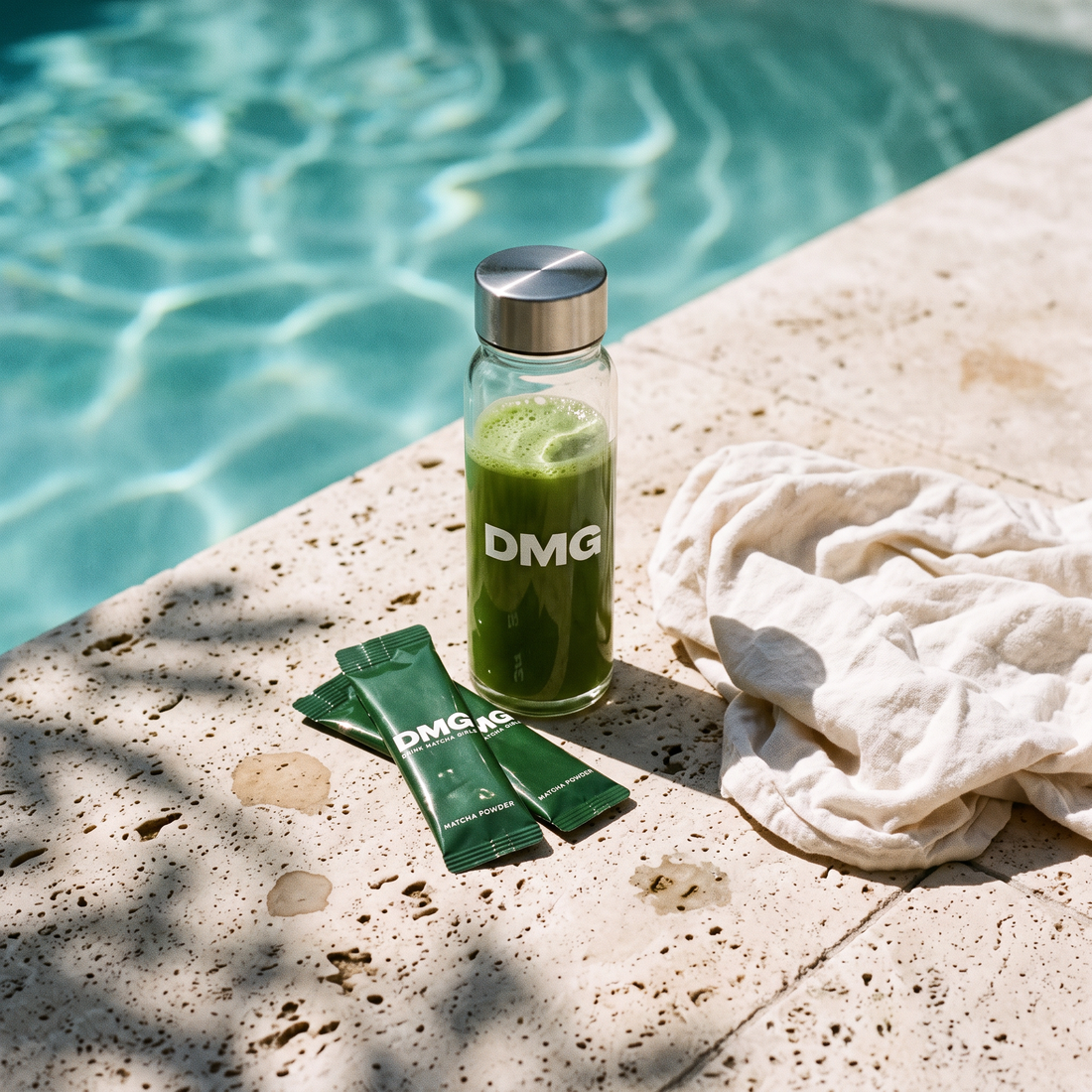
Provide warmth in winter and coolness in summer.
Tea should suit the season and the person. Comfort is a form of hospitality.

Arrange the flowers as though they were in the field.
Keep things natural and unforced. Rikyū loved simplicity over decoration, and let natural beauty do the work.
Be ready ahead of time.
Preparation is what lets you relax. When everything is in place, you can give the moment your full attention.

Be prepared in case it should rain.
Plan for the unexpected so it never spoils the moment. A calm host is a ready host.
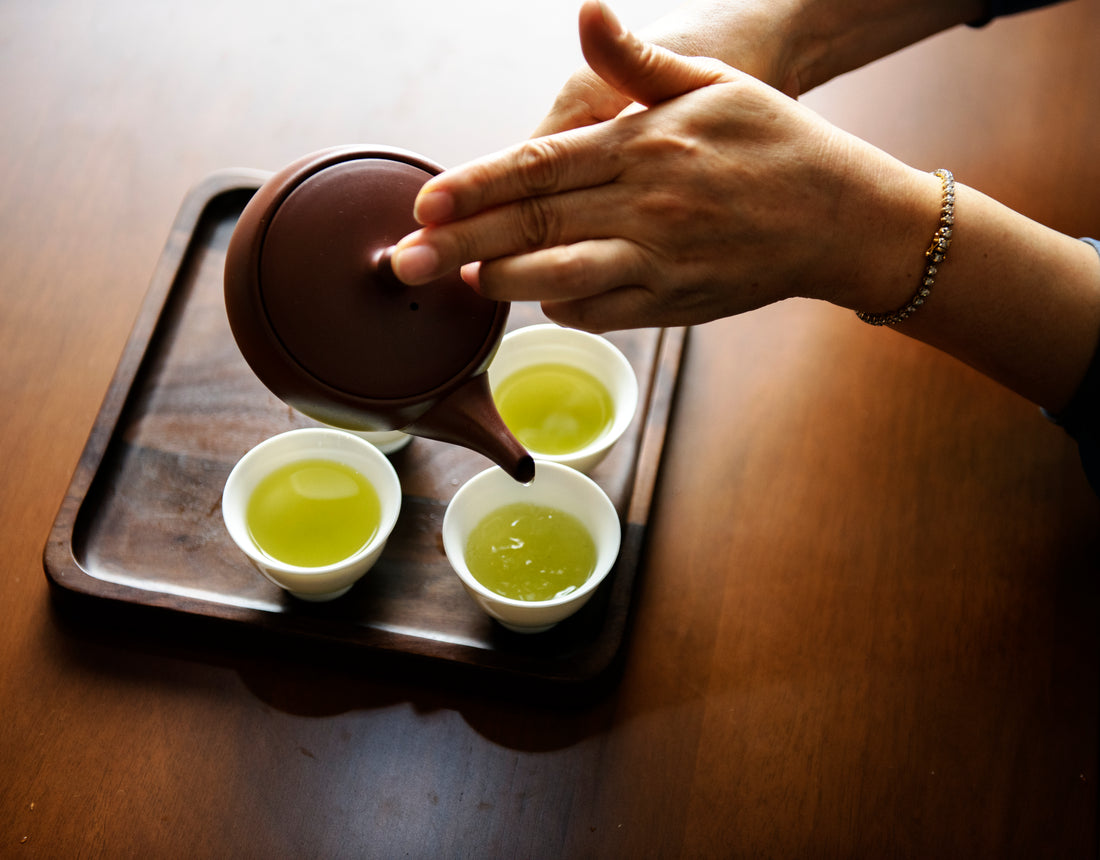
Act with utmost consideration toward your guests.
Tea is a way of caring for other people. Pay attention, and make the other person feel welcome.
English translations of the rules vary slightly.
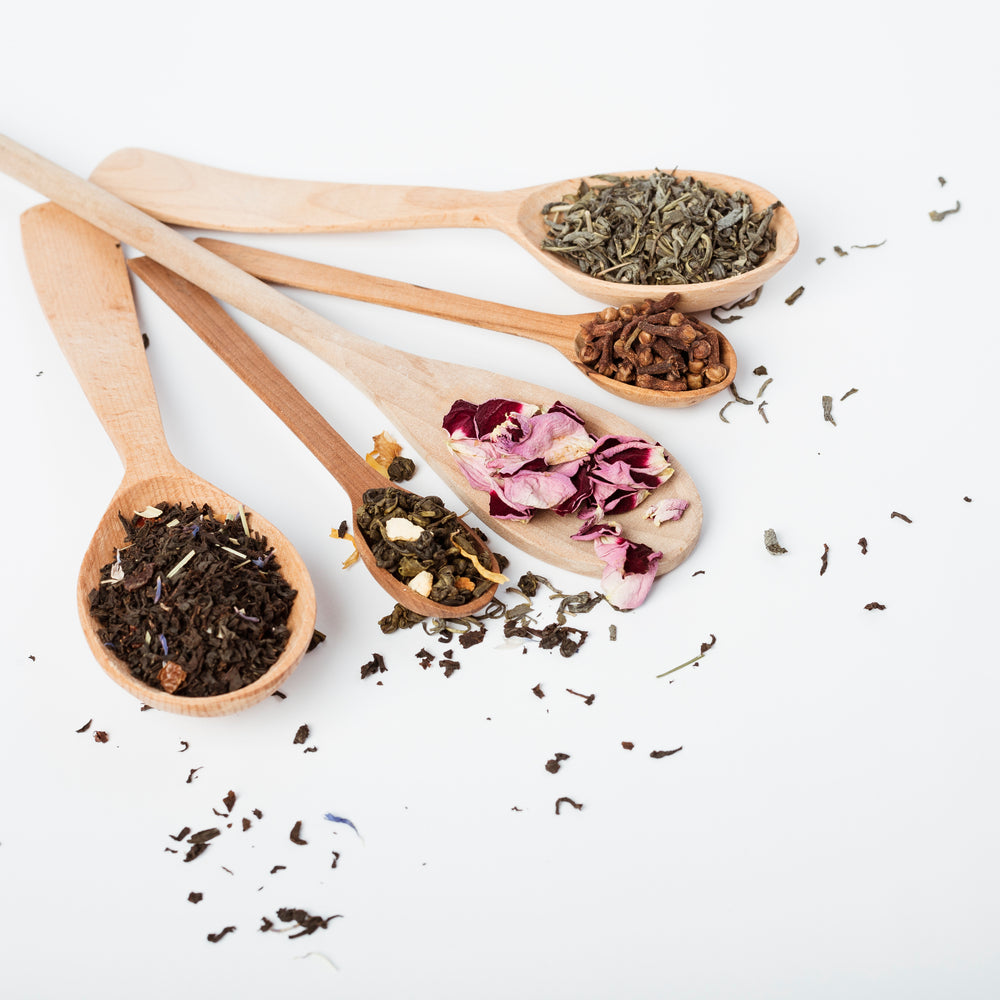
A long tradition, told honestly.
Tea has been linked with wellbeing in Japan for centuries. The monk Eisai, who helped bring tea culture to Japan, wrote a book in the early 1200s praising tea as good for body and spirit. That is history and tradition, not medical advice. Rikyū himself taught tea as a practice of attention, not a remedy.
- Whole leaf. Matcha is the whole green tea leaf, finely ground, so you take in the leaf itself.
- L-theanine and caffeine. Matcha naturally contains both. Many people describe a calmer, steadier kind of focus than they get from coffee. Experience varies.
- Less caffeine than a typical coffee. Roughly 35 to 70 mg per serving, compared with about 95 mg in a typical cup of coffee.
- Plant compounds. Green tea leaf naturally contains catechins, a kind of antioxidant, along with chlorophyll.
Honest tea, honestly described.
No miracle claims
We are a matcha tea brand, not a supplement brand. We share what tea is and how people enjoy it, nothing more.
Clear about caffeine
Matcha naturally contains caffeine, and we say so plainly, with the numbers.
Simple terms
Subscribe and save 20%. Skip, pause or cancel anytime.
30-day returns
Returns on unopened items within 30 days.
Make your first bowl.
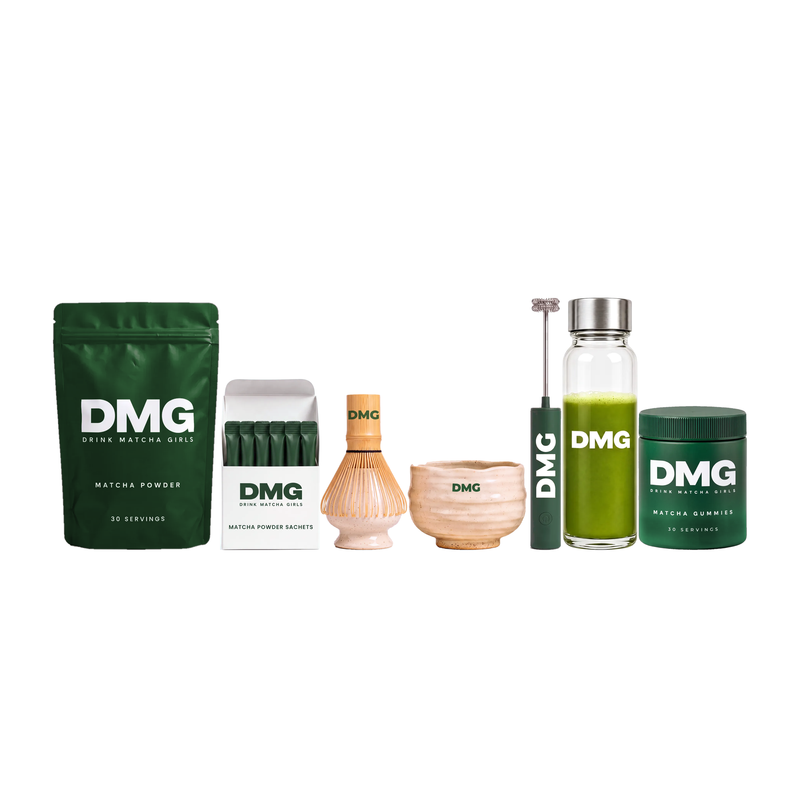
The Rikyū Bundle brings matcha powder, sachets and gummies together, with a whisk, bowl, frother and bottle in your first box.
Explore The Rikyū Bundle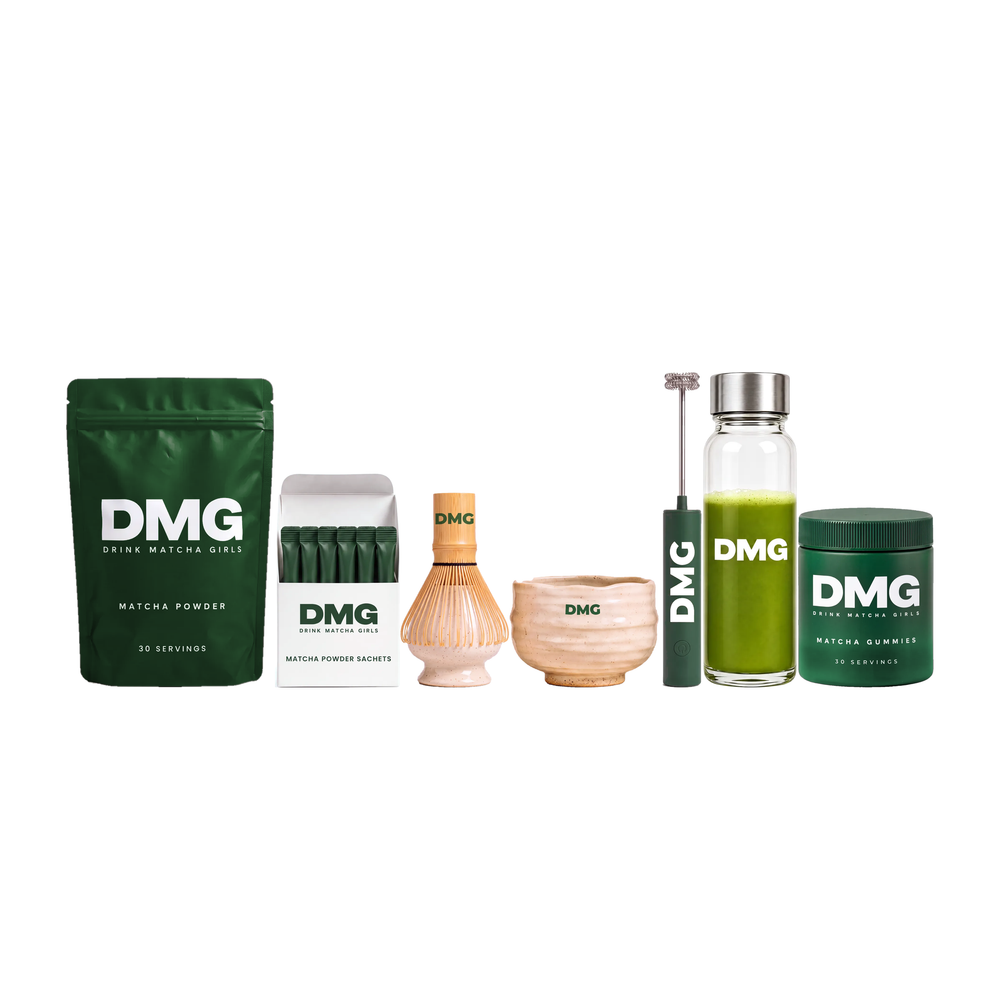
DMG is a matcha tea brand, not a supplement brand. Matcha naturally contains caffeine. This page shares tea history and tradition for interest only. It is not medical advice and is not intended to diagnose, treat, cure or prevent any condition. Talk to your doctor if you are pregnant, nursing, sensitive to caffeine or have a health condition.